
Hello everyone, and welcome back!
In our previous article, we revealed the craftsmanship behind our scarves. Today, I want to take you to the heart of a choice that defines our identity: the adoption of recycled materials. It’s a journey filled with tough questions, unavoidable compromises, and a constant search for balance between ethics and reality.
From Climate Crisis to Action: Why Recycled?
The climate crisis isn’t a distant hypothesis—it’s here, now, and every production decision carries weight. When I began designing our scarves, I asked myself: “How can I create a beautiful product without harming the planet?” The answer wasn’t simple.
Traditional materials like cotton and silk, while alluring, hide unsustainable environmental costs. Cotton, for example, requires up to 10,000 liters of water to produce 1 kg of fiber. A cotton scarf (70–150 grams) consumes between 700 and 1,500 liters—the amount a person drinks in three years. Add to this the use of pesticides and chemical fertilizers, responsible for 16% of global agricultural pollution. Organic cotton, while reducing water use by 71%, needs more land and remains a niche (only 1% of global production).
Silk raises ethical dilemmas. For a single scarf, 300–500 cocoons are needed, obtained by boiling silkworms alive. Ahimsa silk, which spares the larvae, is rare, expensive, and not scalable.
Recycled Twill: An Imperfect but Necessary Solution
Bermondsey recycled twill (51% recycled polyester, 49% virgin) emerged as an alternative. Here’s why:
Reduces oil consumption: every kg of recycled polyester avoids extracting 3.8 liters of oil.
Saves water: compared to cotton, it uses 90% less water.
No pesticides used, unlike intensive crops.
However, it’s not without its drawbacks. Virgin polyester contributes to microplastic emissions (up to 700,000 fibers per wash), which pollute oceans and the food chain. Textile recycling is still in its infancy: only 15% of textiles are recovered globally.
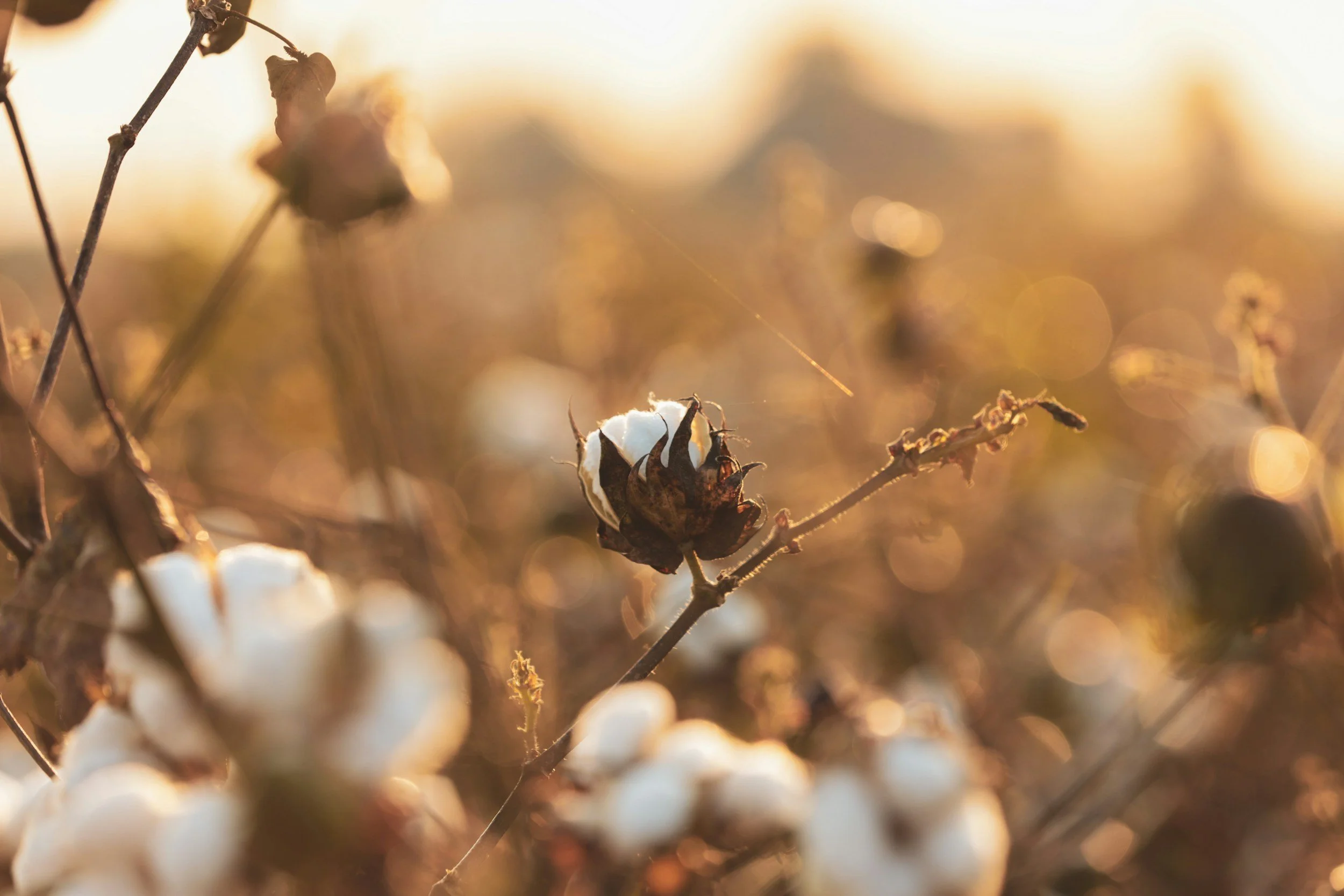
Organic Cotton:
while reducing water use by 71%, needs more land and remains a niche.
The Sustainability Paradox: Why There’s No Perfect Choice
Being completely eco-friendly is a utopia. Every material has its trade-off:
Organic cotton: less water, but more land.
Ethical silk: cruelty-free, but economically unsustainable.
Recycled polyester: reduces waste, but releases microplastics.
We chose recycled twill because, in today’s context, it represents the lesser evil. Our on-demand production avoids waste, and we’re working to incorporate 100% regenerated yarns as soon as they become available.
Towards a Greener Future: What Can We Do Together?
Sustainability is a journey, not a destination. Here’s how we can evolve:
Support innovation: invest in microplastic filtering technologies and advanced recycling.
Educate consumers: washing at low temperatures and using Guppyfriend bags reduces fiber release.
Reward transparent brands: look for certifications like GOTS (for organic cotton) or BCI (Better Cotton Initiative).

One Step at a Time
Every small decision contributes to a greener, more sustainable planet. Even imperfect choices can eventually lead to significant improvements.
Now, the Question Is Yours
If you had to choose a scarf, which material would you prefer? Certified organic cotton, premium ethical silk, or an evolving recycled fabric? There’s no easy answer, but dialogue is the first step toward better solutions.
Perché Abbiamo Scelto Materiali Riciclati per i Nostri Foulard
Nel nostro precedente articolo, vi abbiamo svelato l’artigianalità dietro ai nostri foulard. Oggi, vogliamo portarvi nel cuore di una scelta che definisce la nostra identità: l’adozione di materiali riciclati. Un viaggio fatto di domande scomode, compromessi inevitabili e la ricerca costante di un equilibrio tra etica e realtà.
Dalla Crisi Climatica all’Azione: Perché il Riciclato?
La crisi climatica non è un’ipotesi lontana: è qui, ora, e ogni decisione produttiva ha un peso. Quando abbiamo iniziato a progettare i nostri foulard, ci siamo chiesti: “Come creare un prodotto bello senza danneggiare il pianeta?”. La risposta non è stata semplice.
I materiali tradizionali come cotone e seta, seppur affascinanti, nascondono costi ambientali insostenibili. Il cotone, ad esempio, richiede fino a 10.000 litri d’acqua per produrre 1 kg di fibra. Un foulard in cotone (70-150 grammi) consuma tra 700 e 1.500 litri, equivalenti all’acqua che una persona beve in 3 anni. A questo si aggiunge l’uso di pesticidi e fertilizzanti chimici, responsabili del 16% dell’inquinamento agricolo globale. Il cotone biologico, pur riducendo del 71% il consumo idrico, richiede più terreni e rimane una nicchia (solo l’1% della produzione mondiale)
La seta, invece, solleva dilemmi etici. Per un foulard servono 300-500 bozzoli, ottenuti bollendo vivi i bachi. La seta Ahimsa, che risparmia le larve, è una rarità costosa e non scalabile.
Twill Riciclato: Una Soluzione Imperfetta ma Necessaria
Il twill Bermondsey riciclato (51% poliestere riciclato, 49% vergine) è emerso come alternativa. Ecco perché:
Riduce il consumo di petrolio: ogni kg di poliestere riciclato evita l’estrazione di 3,8 litri di petrolio.
Risparmia acqua: rispetto al cotone, richiede il 90% in meno di risorse idriche.
Non utilizza pesticidi, a differenza delle coltivazioni intensive.
Tuttavia, non è privo di criticità. Il poliestere vergine contribuisce alle emissioni di microplastiche (fino a 700.000 fibre per lavaggio) 6, che inquinano oceani e catena alimentare. Inoltre, il riciclo tessile è ancora agli inizi: solo il 15%dei tessuti viene recuperato globalmente.
Il Paradosso della Sostenibilità: Perché Non Esiste una Scelta Perfetta
Essere completamente ecologici è un’utopia. Ogni materiale ha un trade-off:
Cotone biologico: meno acqua, ma più terreno.
Seta etica: cruelty-free, ma economicamente insostenibile.
Poliestere riciclato: riduce i rifiuti, ma rilascia microplastiche.
Abbiamo optato per il twill riciclato perché, nel contesto attuale, rappresenta il male minore. La produzione on-demand ci permette di evitare sprechi, e lavoriamo per integrare filati rigenerati al 100% non appena disponibili.
Verso un Futuro Più Verde: Cosa Possiamo Fare Insieme?
La sostenibilità è un percorso, non una meta. Ecco come possiamo evolvere:
Sostenere l’innovazione: investire in tecnologie di filtraggio delle microplastiche e riciclo avanzato.
Educare i consumatori: lavaggi a basse temperature e uso di sacchetti Guppyfriend riducono il rilascio di fibre.
Premiare i marchi trasparenti: cercate certificazioni come GOTS (per il cotone biologico) o BCI (Better Cotton Initiative).
E Ora, la Domanda È Vostra
Se doveste scegliere un foulard, quale materiale preferireste? Un cotone biologico certificato, una seta etica premium o un tessuto riciclato in evoluzione? La risposta non è scontata, ma il dialogo è il primo passo verso soluzioni migliori.