
Where Fear Ends, Trust Begins
Hello everyone, and welcome back!
On February 1st, we celebrated International Galgo Day, which originated in Spain to raise awareness and shed light on the conditions these dogs face every day—especially during hunting season, which runs from September until February 1st.
This day is meant to highlight the exploitation and mistreatment many Galgos endure, while also promoting responsible adoption and the respect every dog deserves.
And that’s exactly why today we want to talk about their rebirth. What happens afterward.
What unfolds when a Sighthound is adopted and steps through the door of a home.
We tell this story simply because we’ve lived it ourselves.
Terence’s Arrival
As you know, the true founder of this project is Terence, the Galgo we adopted over a year ago.
He arrived from Spain on November 30th. We went to pick him up near Milan, early in the morning. He was extremely thin, thinner than a Galgo usually is, and had a wound on the tip of his tail.
The volunteers at Pet Levrieri usually advise against rushing to the vet: the first days are already a whirlwind of new smells, voices, and spaces. It’s better to let the dog breathe, observe, and understand where he is.
With Terence, however, we had to make an exception. The tip of his tail was injured, and there was a risk he could lose it. So instead of waiting, we found ourselves at the clinic almost immediately.
Amid all the commotion, Terence allowed himself to be treated with a patience that amazed us. No complaints. No sudden reactions. Just alert eyes and a steady body, as if he had decided he could trust us.
It took consistency. Careful treatment. Small steps. And gradually, that fragile tail, so delicate at first, fully healed.
Once home, his eyes said it all: curiosity, attentiveness… but also fear. We knew he was safe. He, instead, was seeing his new world, and us, for the very first time, just hours before.
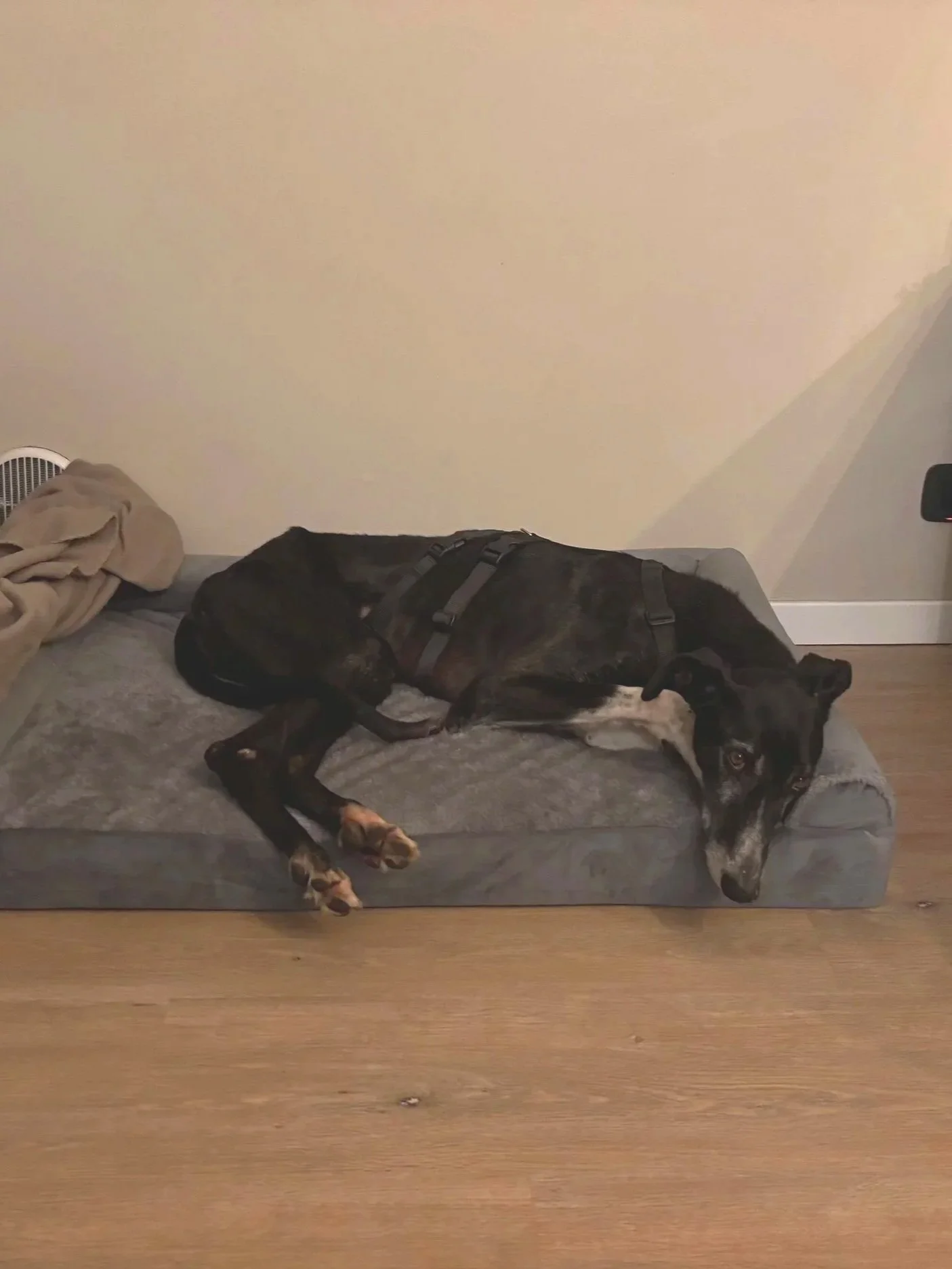
A new Life
His eyes said it all: curiosity, attentiveness… but also fear.
From First Challenges to the Joy of Outings
In the first days, Terence ate and slept. He went out for walks but seemed unaware of where he was. Outside noises frightened him, to the point that he sometimes refused to leave the house.
We won’t hide it: we were worried.
We started letting him hear traffic sounds indoors, to help him get used to them gradually. We took him to the woods, to quieter spaces. We slowed down. And we waited.
At times, it was frustrating: it felt like we were making progress, only for a sudden noise or a new situation to send us backward.
We reached out to professionals, who helped us understand something essential: Terence wasn’t refusing to go out because he didn’t want to. He wanted to, but he was too scared.
Once we understood this, we changed our approach. Slowly, the situation shifted.
By February, he was calmly going on walks through the village. Today, he loves getting in the car and going on trips.
What It Truly Means to Be Reborn
It was during those days that we realized what it really means to be reborn.
Not to change everything at once.
But to learn to simply be.
To slow down.
To respect rhythms that aren’t our own.
Some things Terence adapted to easily. Others required time. And respecting their pace is no small thing. It takes patience. Presence. Trust.
To be reborn, for a Galgo, means finding someone willing to slow down, to wait, to ask nothing in return.
February 1st is to remember.
The days after are to make space.
Awareness is the first step.
Rebirth is the daily work.
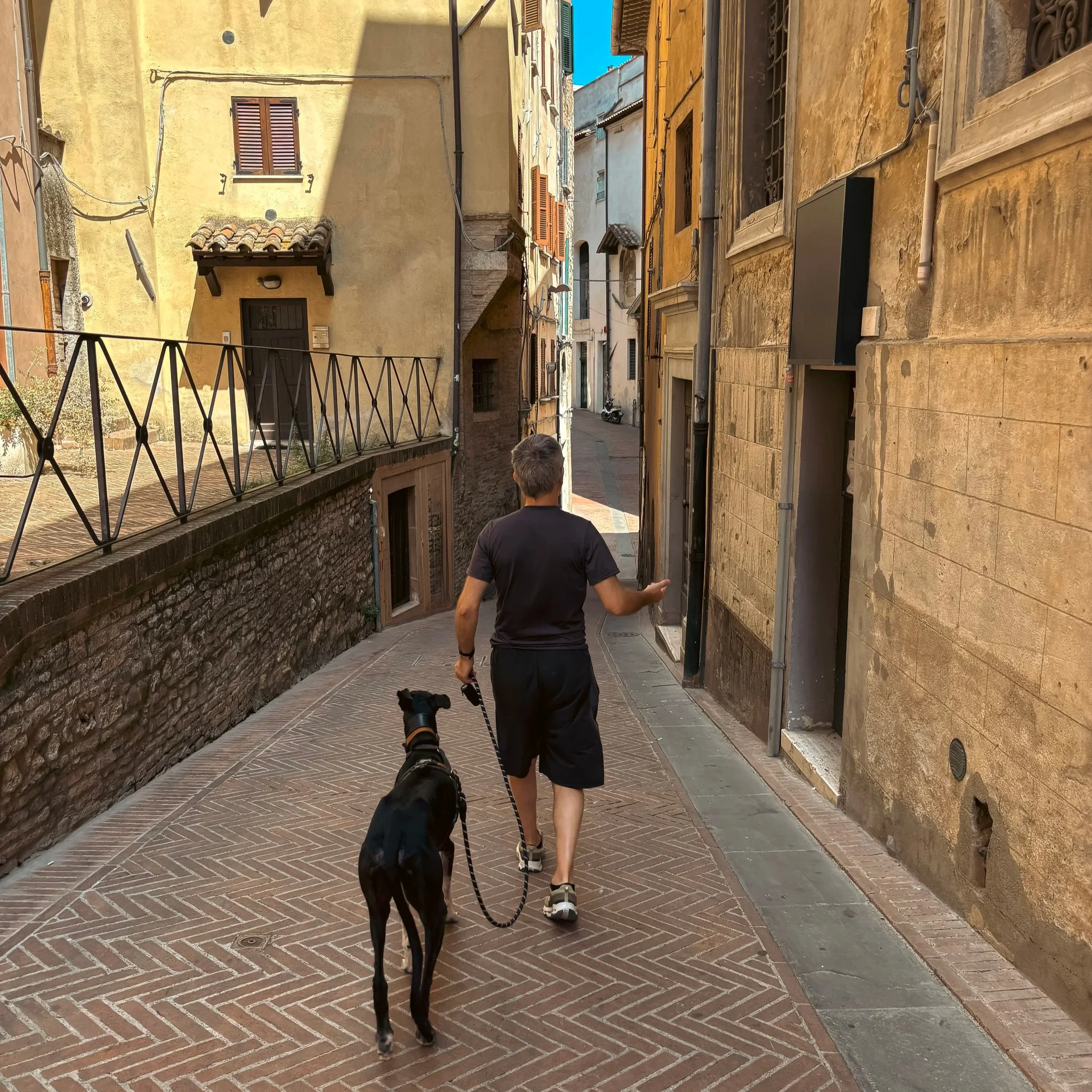
The true meaning of a new reborn
To be reborn, for a Galgo, means finding someone willing to slow down, to wait, to ask nothing in return.
Dove finisce la paura, inizia la fiducia
Dalla giornata dei galgo alla loro rinascita
Buongiorno a tutti e bentrovati!
Il primo febbraio si è celebrata la Giornata Internazionale dei Galgo, nata in Spagna per sensibilizzare e per far conoscere le condizioni in cui questi cani vivono ogni giorno, soprattutto durante la stagione della caccia, che inizia a settembre e si conclude proprio il primo febbraio.
Questa giornata serve a portare consapevolezza sullo sfruttamento e maltrattamento di molti galgo, ma anche a promuovere adozioni responsabili e il rispetto che ogni cane merita.
Ed è proprio per questo che oggi vogliamo parlare della loro rinascita.
Di cosa succede dopo.
Di cosa accade quando un Sighthound viene adottato e varca la soglia di una casa. Lo raccontiamo semplicemente perché lo abbiamo vissuto sulla nostra pelle.
L’arrivo di Terence
Come sapete, il vero fondatore di questo progetto è Terence, il galgo che abbiamo adottato ormai più di un anno fa.
Era il 30 novembre quando è arrivato dalla Spagna. Siamo andati a prenderlo nei dintorni di Milano, di mattina presto. Era magrissimo, ancora più di quanto lo siano normalmente, e aveva una ferita sulla punta della coda.
I volontari di Pet Levrieri di solito consigliano di non correre subito dal veterinario: i primi giorni sono già un terremoto di odori, voci, spazi nuovi. Meglio lasciare che il cane respiri, osservi, capisca dove si trova. Con lui, però, abbiamo dovuto fare un’eccezione. La punta della coda era ferita e c’era il rischio di perderla. Così, invece di aspettare, ci siamo ritrovati in ambulatorio quasi subito. In mezzo a tutto quel trambusto, Terence si è lasciato medicare con una pazienza che ci ha spiazzati. Nessuna lamentela, nessuna reazione brusca. Solo occhi attenti e un corpo fermo, come se avesse deciso che poteva fidarsi. È servita costanza. Medicazioni, attenzione, piccoli progressi. Ma alla fine quella coda, così fragile all’inizio, è guarita del tutto.
Una volta arrivato a casa, i suoi occhi dicevano tutto. C’era curiosità. C’era attenzione. Ma anche paura. Noi sapevamo che era al sicuro. Lui, invece, ci aveva visto per la prima volta solo poche ore prima.
Dalle prime difficoltà alla voglia di gite
Nei primi giorni Terence mangiava e dormiva. Usciva per le passeggiate, ma sembrava non rendersi conto di dove fosse. I rumori esterni lo spaventavano, fino al punto di non voler più uscire.
Non lo nascondiamo: eravamo preoccupati.
Abbiamo iniziato a fargli ascoltare rumori di traffico in casa, per aiutarlo ad abituarsi. Lo abbiamo portato nei boschi, in ambienti più tranquilli. Abbiamo rallentato. E abbiamo aspettato.
In alcuni momenti è stato frustrante: sembrava di fare passi avanti, e poi bastava un rumore improvviso o una situazione nuova per tornare indietro.
Ci siamo rivolti a dei professionisti, che ci hanno aiutato a capire una cosa fondamentale: Terence non rifiutava di uscire perché non voleva. Voleva, ma aveva troppa paura.
Una volta compreso questo, abbiamo cambiato approccio. Piano piano la situazione si è trasformata.
A febbraio usciva serenamente per le passeggiate in paese. Oggi adora salire in macchina e andare in gita.
Cosa significa davvero rinascere
È in quei giorni che abbiamo capito cosa significa davvero rinascere.
Non cambiare tutto in fretta.
Ma imparare a stare.
A rallentare.
A rispettare tempi che non sono i nostri.
Su alcune cose Terence si è adattato facilmente. Su altre ha avuto bisogno di tempo. E rispettare il loro tempo non è una cosa scontata. Richiede pazienza. Presenza. Fiducia.
Rinascere, per un galgo, significa trovare qualcuno disposto a rallentare, ad aspettare, a non pretendere nulla.
Il 1° febbraio serve a non dimenticare.
I giorni dopo servono a fare spazio.
La sensibilizzazione è il primo passo.
La rinascita è il lavoro quotidiano.